
Now Accepting Blue Cross Blue Shield Patients - Not Impacted by Memorial Hermann Network Changes. Now Accepting Blue Cross Blue Shield Patients - Not Impacted by Memorial Hermann Network Changes.

Barrett’s Esophagus

The esophagus is a slender, muscular tube connecting the stomach and throat. Prolonged gastroesophageal reflux disease (GERD) can cause tissue alterations in the esophagus lining, increasing susceptibility to esophageal cancer and other physical changes. The pre-cancerous condition is known as Barrett’s esophagus.

What Is Barret’s Esophagus?

Barrett’s esophagus is a serious medical condition characterized by the abnormal modification of the esophageal lining, the tube that connects the throat and the stomach. This transformation typically occurs as a result of chronic exposure to stomach acid, frequently associated with gastroesophageal reflux disease (GERD).

In Barrett’s esophagus, the normal squamous cells lining the esophagus are replaced with a type of cell that is not usually found in the esophagus, known as columnar epithelial cells. These cells are more resistant to stomach acid but are precancerous, meaning that they have the potential to develop into cancerous cells over time. This cellular change is a process known as metaplasia.

Though Barrett’s esophagus does not always lead directly to cancer, it’s crucial to acknowledge that it significantly heightens the risk of developing esophageal adenocarcinoma, a serious type of throat cancer. Because of this, it’s especially important for individuals suffering from long-term, untreated GERD to be aware of this potential complication. They should be regularly checked for BE through methods such as an endoscopy, where a small camera is used to visually inspect the esophagus, or a biopsy, which involves taking a sample of the esophageal lining for examination under a microscope.
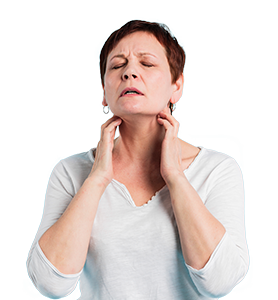

Woman holding her neck in discomfort.
Man in yellow shirt holding stomach.

What Are the Most Common Symptoms?

The symptoms of BE often resemble those of GERD, including heartburn and chest pain, making many patients unaware of its development. As the condition progresses, more severe symptoms may emerge, such as:

  • Pain or difficulty swallowing
  • Vomiting blood
  • Black, bloody, or tarry stools
  • A burning sensation in the back of your throat
  • A chronic cough
  • Frequent laryngitis 
Alcohol and cigarettes thrown in trash

How Is Barrett’s Esophagus Treated?

People with BE should avoid alcohol, caffeine, and tobacco. Weight loss can help minimize GERD symptoms, thereby reducing the impact of Barrett’s esophagus. Certain medications, such as proton pump inhibitors, may be used to treat the condition. In some cases, surgical procedures to destroy abnormal cells or even part of the esophagus may be necessary.

Insurance Providers We Accept

We accept a wide range of insurance plans. For insurance coverage that isn’t listed, please contact your closest office location.
Gastro Health & Nutrition medical team

About Our Comprehensive Digestive Health Care

Our expert team helps people identify, treat, and manage their digestive irregularities. Allowing them to have incredible experiences in their lives that otherwise might not have been possible. We provide a comfortable environment in which we educate our patients to fully understand what is affecting their body and how it is best treated. Nuestro equipo es bilingüe.

  • Nutrition & Wellness
  • Digestive Health
  • IBS, Dyspepsia

  • Liver Disease

Frequently Asked Questions

What is Barrett's esophagus?
Barrett’s esophagus is a serious condition where the normal tissue lining of your esophagus undergoes an abnormal modification. Due to chronic acid exposure, the normal squamous cells are replaced by a different type of cell (columnar epithelial cells) that are more resistant to stomach acid but are considered precancerous.
The primary cause is long-term, untreated gastroesophageal reflux disease (GERD). Chronic exposure to stomach acid from severe acid reflux slowly damages and alters the tissue inside the lower esophagus over time. However, it is important to note that not everyone with GERD will develop Barrett’s esophagus.
Barrett’s esophagus often develops silently, and some patients experience no noticeable symptoms at all. When symptoms do occur, they typically mimic everyday acid reflux or GERD, such as chronic heartburn and chest pain. As the condition progresses, more severe symptoms can emerge, including difficulty swallowing, chronic cough, vomiting blood, or black, tarry stools.
Because early symptoms can easily be dismissed as normal heartburn, professional screening is necessary. We typically diagnose the condition using an upper endoscopy, which allows us to visually inspect the esophageal lining with a small, high-definition camera. During this brief procedure, we also take a biopsy (tissue sample) to confirm precancerous cellular changes under a microscope.
Barrett’s esophagus does not always lead directly to cancer, but it does significantly raise your risk of developing esophageal adenocarcinoma (throat cancer). Treatment focuses on stopping disease progression and lowering that cancer risk. Based on how far the condition has developed, treatment can include acid-suppressing medications (like proton pump inhibitors), lifestyle and dietary modifications, and sometimes minimally invasive procedures to destroy the abnormal precancerous cells.