
Twenty years ago, fatty liver disease occupied a brief section in most medical textbooks. Today, it is the most common liver condition in the United States, affecting approximately one in three adults. Symptoms are typically absent until the disease has advanced, and the diagnosis is often made incidentally on a routine blood panel or an imaging study ordered for an unrelated reason. The increased prevalence reflects shifts in dietary patterns, physical activity levels, and the rising number of Americans who meet the criteria for metabolic syndrome. The information below covers the underlying disease process and the available treatment options for patients whose recent testing has flagged the liver.
What Fatty Liver Disease Is
The liver is a metabolically active organ. It filters blood, synthesizes proteins, stores energy, and processes the majority of substances ingested. A healthy liver contains very little fat. Fatty liver disease describes the accumulation of fat within liver cells to a degree that interferes with normal hepatic function.
Two main forms are recognized. Alcoholic fatty liver disease results from sustained heavy alcohol consumption. The second form, previously termed non-alcoholic fatty liver disease, or NAFLD, has been renamed metabolic dysfunction-associated steatotic liver disease, or MASLD. MASLD is unrelated to alcohol intake and is driven by insulin resistance, obesity, type 2 diabetes, and dyslipidemia. The MASLD population accounts for the rapid rise in case volume.
Why Prevalence Has Risen
Several large-scale dietary and lifestyle changes have converged in directions that increase hepatic fat accumulation.
Dietary Sugar Has Increased
The liver is responsible for nearly all fructose metabolism. Moderate fructose intake from whole fruit poses no concern. A daily sweetened coffee beverage, a sugar-containing soda at lunch, and a dessert at dinner deliver a fructose load the liver was not designed to handle. Over time, excess fructose is converted to fat and stored within hepatocytes.
Waistlines Have Expanded
Adult obesity rates in Texas approach 35 percent. Visceral fat, the adipose tissue surrounding internal organs, correlates directly with hepatic fat content. A 2-inch increase in waist circumference is associated with a meaningful increase in the risk of developing fatty liver disease.
Type 2 Diabetes and Prediabetes Have Increased
Approximately half of adults with type 2 diabetes also have fatty liver disease. The insulin resistance underlying elevated blood glucose also drives fat accumulation in liver cells. A diagnosis of prediabetes or a rising hemoglobin A1C frequently involves the liver, even when the liver is not initially discussed during the office visit.
Sedentary Behavior Has Increased
Physical activity removes glucose from the bloodstream without requiring insulin. When activity declines, circulating insulin levels rise, and elevated insulin signals the liver to store fat. Desk-based work, long commutes, and screen-heavy evenings compound the effect.
Symptoms Are Often Subtle or Absent
Most cases of fatty liver disease are clinically silent. The liver has substantial reserve capacity and lacks pain receptors comparable to those in other organs. When symptoms do appear, they are nonspecific:
- Mild fatigue often attributed to work demands or sleep quality
- Dull discomfort or fullness in the upper right quadrant of the abdomen
- Unexplained fluctuations in body weight
- Cognitive sluggishness patients describe as feeling off
The condition is most often identified when a primary care physician orders a metabolic panel for an annual physical and notes elevated liver enzymes, particularly ALT and AST. That finding frequently prompts referral to a gastroenterologist or hepatologist.
The Four Stages of Fatty Liver Disease
Fatty liver disease progresses through defined stages. Earlier identification correlates with greater reversibility.
Simple steatosis describes fat accumulation in the liver without significant inflammation. This stage is the most common and is largely reversible with lifestyle modification. MASH, or metabolic dysfunction-associated steatohepatitis, describes fat accumulation accompanied by inflammation, the point at which liver cells begin to sustain damage. Fibrosis describes scar tissue formation within the liver. Cirrhosis describes advanced scarring at which the liver can no longer function normally and the patient is at increased risk for liver failure and hepatocellular carcinoma.
The encouraging finding: most patients identified at the simple steatosis stage can reverse the condition entirely. The clinically significant concern: a subset of patients with MASH progress to cirrhosis within 10 to 15 years, and fatty liver disease has become one of the leading indications for liver transplantation in the United States.
Interventions That Reverse Fatty Liver Disease
The same factors that drive disease progression also reverse it when applied consistently. The supporting research is unusually clear.

Achieve 7 to 10 Percent Body Weight Reduction
A 200-pound patient who loses 15 to 20 pounds typically reduces hepatic fat by 30 percent or more. At a 10 percent weight reduction, inflammation declines substantially and a subset of patients shows improvement in fibrosis. Weight loss remains the single most effective intervention.
Reduce Added Sugar and Refined Carbohydrates
Strict ketogenic protocols are not required. Removing added sugar from daily intake is. Sweetened beverages, sugar-containing coffee drinks, desserts, and ultra-processed snacks are the dominant sources. Low-carbohydrate and Mediterranean-style dietary patterns consistently outperform low-fat patterns for hepatic outcomes in head-to-head studies.
Engage in Regular Physical Activity
Both aerobic and resistance training reduce hepatic fat content, even in the absence of significant weight loss. Most hepatologists recommend 150 minutes per week of moderate-intensity activity, distributed across multiple days. Walking and yard work qualify.
Reduce or Eliminate Alcohol Intake
Even moderate alcohol consumption accelerates the progression of MASLD. In the presence of existing hepatic inflammation, alcohol intensifies the underlying disease process. Many hepatologists recommend that patients with fatty liver disease abstain from alcohol entirely during active treatment.
Treat Associated Metabolic Conditions
Fatty liver disease rarely occurs in isolation. Optimizing blood glucose, blood pressure, and cholesterol levels is integral to liver-directed treatment, not separate from it. Several GLP-1 medications used for diabetes and weight management have shown promising effects on hepatic fat content in recent clinical studies.
When to See a Gastroenterologist About the Liver
Gastroenterology or hepatology evaluation is appropriate when any of the following apply:
- Recent blood work showed elevated liver enzymes, including ALT or AST
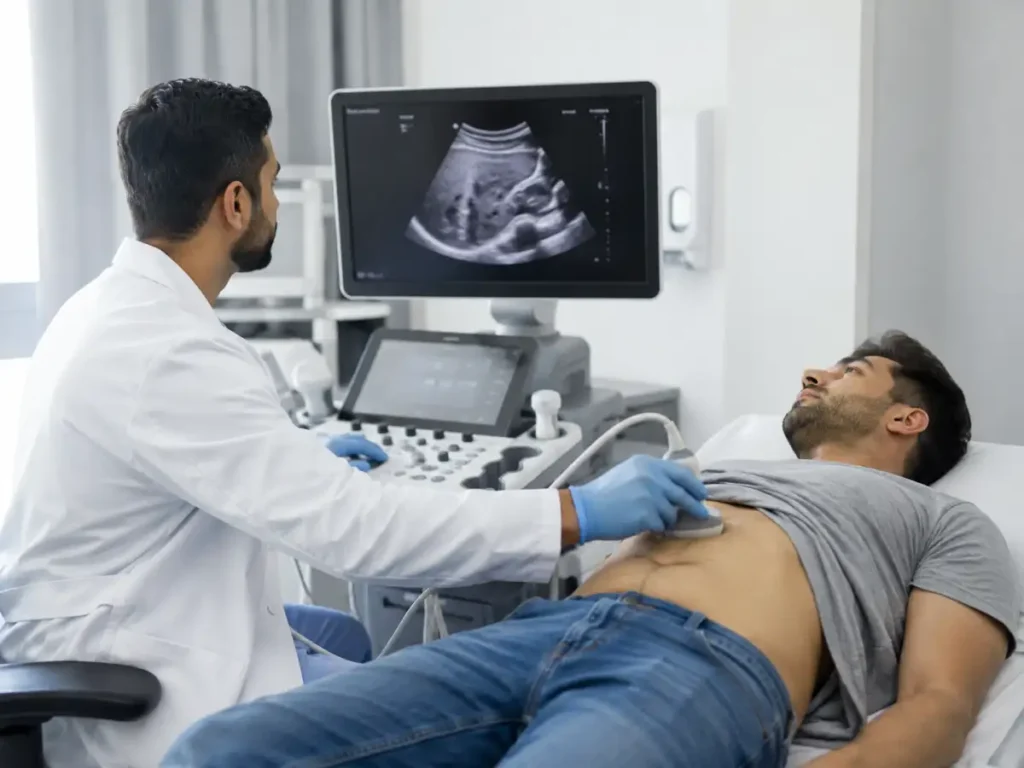
- An ultrasound, CT, or MRI report mentioned a fatty or echogenic liver
- A patient with type 2 diabetes or metabolic syndrome has not undergone formal liver evaluation
- A family history of cirrhosis or liver disease is present
- A diagnosis of MASLD or MASH has been made and a structured treatment plan is needed
A hepatologist can order non-invasive tests, including FibroScan elastography, that measure both hepatic fat content and stiffness without biopsy, providing an accurate disease stage and guiding subsequent management.
Schedule a Liver Evaluation at Gastro Health & Nutrition
The board-certified gastroenterologists at Gastro Health & Nutrition manage fatty liver disease patients across Cypress, Katy, Sugar Land, Portland, and Victoria. Dr. Dharmendra Verma is board-certified in both Gastroenterology and Hepatology, and the clinical team coordinates regularly with primary care physicians and endocrinologists across the greater Houston area to address fatty liver disease as part of a unified metabolic treatment plan.
Patients with a recent abnormal liver finding can request an appointment at yourgastrohealth.com or contact the nearest office. When identified early, fatty liver disease is among the more reversible conditions in gastroenterology.
Frequently Asked Questions
What causes fatty liver disease?
Fatty liver disease most often results from insulin resistance, obesity, type 2 diabetes, high cholesterol, and high added-sugar intake. Heavy alcohol use causes a separate form known as alcoholic fatty liver disease.
Can fatty liver disease be reversed?
Yes. Most patients identified at the simple steatosis stage can fully reverse the condition through 7 to 10 percent body weight reduction, reduced added sugar intake, regular physical activity, and treatment of underlying metabolic conditions.
What is the difference between NAFLD and MASLD?
NAFLD, or non-alcoholic fatty liver disease, and MASLD, or metabolic dysfunction-associated steatotic liver disease, describe the same condition. The terminology was updated in 2023 to better reflect the underlying metabolic cause and to remove the implicit comparison with alcoholic liver disease.
Are elevated liver enzymes always caused by fatty liver disease?
Not always. Elevated ALT or AST can result from medications, viral hepatitis, autoimmune conditions, or fatty liver disease. Persistent elevation warrants evaluation by a gastroenterologist or hepatologist.
When should a patient see a gastroenterologist for fatty liver disease?
Evaluation is appropriate when blood work shows elevated liver enzymes, when an imaging study mentions a fatty liver, when type 2 diabetes or metabolic syndrome is present and the liver has not been formally assessed, or when MASLD or MASH has been diagnosed and a structured plan is needed.