
Colorectal cancer was once associated primarily with patients in their 60s and 70s. That demographic profile has shifted. Over the past two decades, diagnosis rates have risen steadily in adults under 55, prompting the American Cancer Society to lower the recommended screening age from 50 to 45. For patients in that range who have not yet scheduled a colonoscopy, this single preventive measure offers some of the strongest return per minute of medical attention available. Screening saves lives by identifying polyps before they progress to cancer.
Why the Screening Age Was Lowered to 45
The American Cancer Society updated its screening guidelines in 2018, dropping the recommended starting age for average-risk adults from 50 to 45. The United States Preventive Services Task Force followed in 2021. The rationale was clinical and clear. Colorectal cancer rates among Americans under 50 had been rising approximately 2 percent per year for two decades, with no single environmental or genetic factor identified as the primary driver.
Researchers continue to investigate dietary patterns, early-life antibiotic exposure, microbiome alterations, and environmental contaminants. While the underlying cause remains under study, the clinical response is settled. Earlier screening identifies cancer at earlier stages, when the five-year survival rate exceeds 90 percent.
Early Colorectal Cancer Is Frequently Asymptomatic
A persistent misconception is that colorectal cancer announces itself through clear symptoms. It typically does not. Early-stage disease and the polyps that precede it rarely produce symptoms patients can detect.
By the time symptoms emerge, including blood in the stool, unexplained weight loss, persistent changes in bowel habits, or ongoing abdominal pain, the disease has often progressed beyond stage 1. Screening identifies disease at the polyp stage, when intervention is straightforward and curative. Polyps can be removed during the same procedure that identified them, ending the disease process before it begins.
What a Colonoscopy Involves
Patients in Cypress, Katy, and Sugar Land frequently expect the procedure itself to be the most demanding portion of the screening. In practice, bowel preparation is the more challenging step, and even the preparation is well tolerated by most patients.
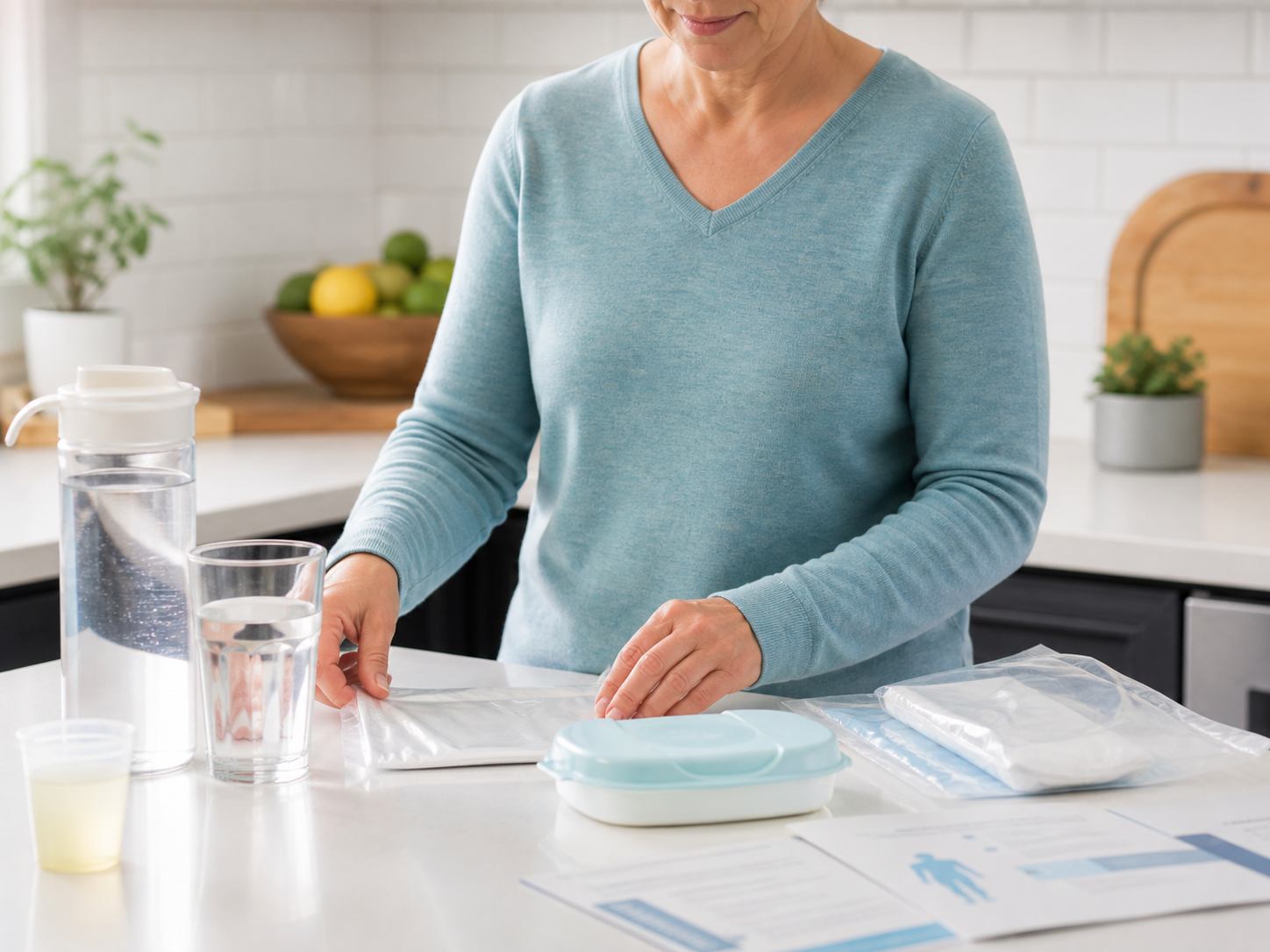
The Day Before: Clear Liquids and Bowel Preparation
Clear liquids are consumed throughout the day before the procedure. A prescribed bowel preparation solution is taken in the evening, often divided into two doses. The taste is unpalatable, and patients should plan to remain near a bathroom for several hours. This represents the principal discomfort of the entire screening process.
The Procedure: Approximately 30 Minutes
Patients check in, change into a gown, and receive intravenous sedation. The procedure is not consciously experienced. The gastroenterologist advances a flexible scope with a small camera through the colon and examines the lining. Polyps identified during the examination are removed during the same procedure and submitted for pathologic analysis. Most colonoscopies are completed within 30 minutes.
Recovery
Patients require a designated driver due to sedation. Most return to normal activities the following day. A complete report, including pathology findings and a recommended interval until the next screening, is provided after the procedure.
Polyps Are the Reason Screening Works
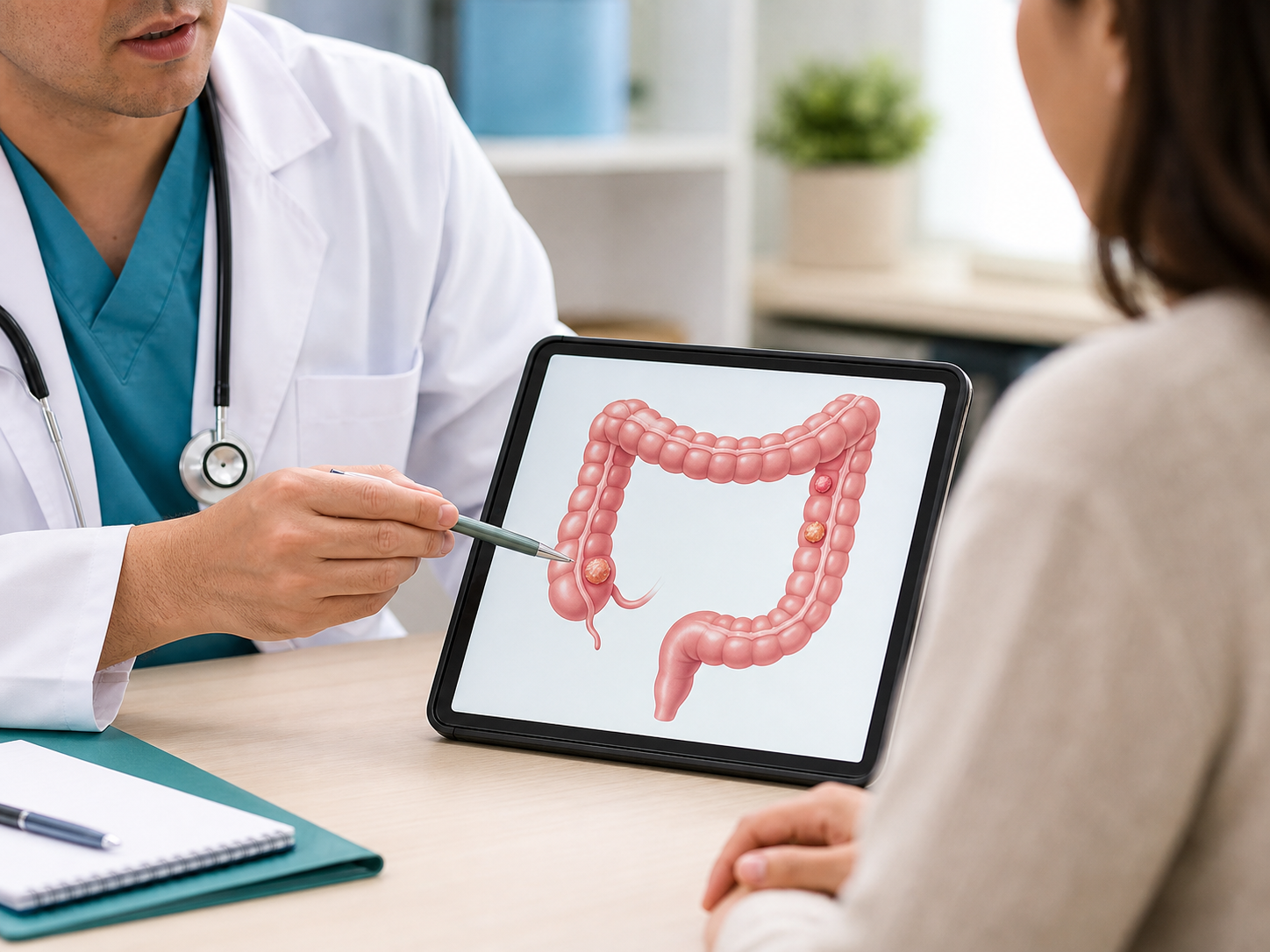
Most colorectal cancers originate as polyps, small growths on the inner wall of the colon. Not every polyp progresses to cancer, though nearly every colorectal cancer arises from a polyp that was never identified or removed. The typical progression from a low-grade polyp to invasive cancer takes 10 to 15 years.
This timeline is the foundation of effective screening. A colonoscopy every 10 years for average-risk adults is sufficient to identify and remove polyps while they remain benign. The same procedure that screens the patient also treats the patient. A second appointment for polyp removal is not required; the polyp is removed during the index procedure.
Patients Who Should Begin Screening Before 45
The age 45 recommendation applies to adults at average risk. Higher-risk categories warrant earlier screening, including patients who meet any of the following criteria:
- A first-degree relative, meaning a parent, sibling, or child, diagnosed with colorectal cancer or advanced polyps
- A personal history of inflammatory bowel disease, including Crohn’s disease or ulcerative colitis
- A known familial genetic syndrome such as Lynch syndrome or familial adenomatous polyposis, also called FAP
- A history of abdominal radiation therapy
- African American heritage, given historically higher incidence and earlier onset
For patients with a relevant family history, the general guideline is to begin screening 10 years prior to the age at which the relative was diagnosed, or at age 40, whichever is earlier. A relative diagnosed at age 48, for example, would prompt initial screening at age 38.
How Stool-Based Tests Compare
Cologuard and fecal immunochemical tests, also called FIT, are non-invasive screening alternatives that detect blood or abnormal DNA in stool samples. Both are preferable to no screening and are reasonable options for patients who cannot undergo colonoscopy. They have one important limitation: they do not remove polyps. A positive result on either test still requires a follow-up colonoscopy to identify the cause.
Stool-based tests must also be repeated more frequently. Cologuard is recommended every three years and FIT annually. A colonoscopy with normal findings provides 10 years of clearance. For most patients, one procedure per decade is more practical than yearly testing.
Insurance Coverage for Screening Colonoscopy
Under the Affordable Care Act, screening colonoscopies are classified as preventive care and are covered without out-of-pocket cost for most insured patients. When polyps are identified and removed during the screening, certain insurance plans reclassify the procedure as diagnostic, which may affect billing. The specifics vary by plan. The Gastro Health & Nutrition front desk teams confirm coverage and walk every patient through the billing detail before the procedure to avoid unexpected charges.
Gastro Health & Nutrition accepts most major insurance plans, including Blue Cross Blue Shield, and verifies coverage in advance of any pharmacy visit for bowel preparation.
Schedule a Colonoscopy at Gastro Health & Nutrition
Board-certified gastroenterologists at Gastro Health & Nutrition perform screening colonoscopies at offices across the greater Houston area and Gulf Coast, including Cypress, Katy, Sugar Land, Portland, and Victoria. Same-week scheduling is frequently available. The clinical team handles insurance verification and bowel preparation instructions during the initial visit.
Patients aged 45 or older who are due for screening, and patients with a family history who have not yet begun screening, can request an appointment at yourgastrohealth.com or call the nearest office. A 30-minute procedure once per decade remains one of the highest-yield interventions in preventive medicine.
Frequently Asked Questions
Why did the colonoscopy screening age drop to 45?
The American Cancer Society lowered the recommended screening age from 50 to 45 in 2018 because colorectal cancer rates in Americans under 50 had been rising about 2 percent per year for two decades. Earlier screening identifies cancer at earlier stages, when survival rates exceed 90 percent.
How often is a colonoscopy needed for an average-risk adult?
Average-risk adults with a normal colonoscopy result generally repeat screening every 10 years. Patients with polyps removed or with a family history may require a shorter interval, often 3 to 5 years, as recommended by the gastroenterologist.
Are stool-based tests as effective as a colonoscopy?
Stool-based tests such as Cologuard and FIT are useful screening tools but cannot remove polyps. A positive result still requires a colonoscopy. Stool tests must also be repeated more frequently, every one to three years, compared with a colonoscopy every 10 years.
Does insurance cover a screening colonoscopy?
Under the Affordable Care Act, screening colonoscopies are covered as preventive care with no out-of-pocket cost for most insured patients. If polyps are removed during the procedure, billing may shift to diagnostic. The Gastro Health & Nutrition team verifies coverage in advance of every appointment.
At what age should colonoscopy screening begin for someone with a family history of colorectal cancer?
For patients with a first-degree relative diagnosed with colorectal cancer, screening typically begins 10 years before the relative’s age at diagnosis, or at age 40, whichever is earlier.